

How to Choose the Right Custom Hoodie: Fabric, Printing & Embellishment Guide
Custom hoodies are one of the most versatile products for clothing brands, startups, sports teams, gyms, streetwear businesses, and promotional apparel companies in the USA. However, creating a high-quality hoodie involves more than choosing a design. Fabric composition, weight, fit, printing, embroidery, embellishments, labels, and manufacturing quality all affect the final product.
Whether you are developing a new clothing collection or looking for Custom Hoodies for your brand, understanding these options can help you create a product that matches your customers’ expectations.
In this guide, we explain the most important factors to consider when choosing a custom hoodie.
1. Choose the Right Hoodie Fabric
Fabric is one of the first decisions to make when developing a custom hoodie. The right material depends on the season, target customer, desired comfort, and positioning of your brand.
Cotton Hoodies
Cotton is popular because it provides a soft and comfortable feel. It can be suitable for casualwear, streetwear, lifestyle collections, and everyday hoodies.
Cotton-Blend Hoodies
Cotton blends can combine softness with additional durability and shape retention. They are commonly used when brands want a balance between comfort, performance, and production cost.
Fleece Hoodies
Fleece is a popular option for colder seasons because of its warm and soft interior. Heavyweight fleece can be particularly suitable for premium streetwear and winter collections.
Lightweight Fabrics
Lightweight hoodie fabrics can work well for transitional seasons, layering, gymwear, and customers who prefer less bulk.
When working with a Custom Clothing Manufacturer, discuss fabric composition, GSM, shrinkage, softness, stretch, washing performance, and intended use before approving your sample.
2. Select the Right Hoodie Weight
Hoodie weight is usually discussed in GSM (grams per square meter). A lighter hoodie can feel easier to layer, while a heavier hoodie can provide a more substantial premium feel.
Your choice should depend on your product category:
- Lightweight hoodies — suitable for layering and mild weather
- Midweight hoodies — versatile for everyday apparel
- Heavyweight hoodies — suitable for premium streetwear and colder weather
Instead of selecting fabric based only on GSM, test the actual sample. Two fabrics with similar GSM can feel different because of their fiber composition, knitting method, finishing, and construction.
3. Choose Your Custom Hoodie Printing Method
The right printing method depends on your artwork, fabric, quantity, and desired finish.
Screen Printing
Screen printing is widely used for hoodies and other garments, particularly for larger production quantities and bold artwork. It can provide durable and vibrant graphics when properly produced.
DTF Printing
Direct-to-film (DTF) printing is useful for detailed artwork, logos, lettering, and multi-color designs. It offers flexibility for custom apparel and smaller production runs.
DTG Printing
Direct-to-garment (DTG) printing applies digital artwork directly onto suitable garments. It can be useful for detailed, multi-color graphics and designs where a soft printed finish is desired.
Puff Printing
Puff printing creates a raised, three-dimensional effect. It is particularly popular for streetwear, hoodies, sweatshirts, logos, and typography where brands want additional texture.
Sublimation
Sublimation is primarily suited to polyester fabrics because the dye becomes integrated into the fibers. It is commonly associated with performance apparel and sportswear rather than traditional heavyweight cotton hoodies.
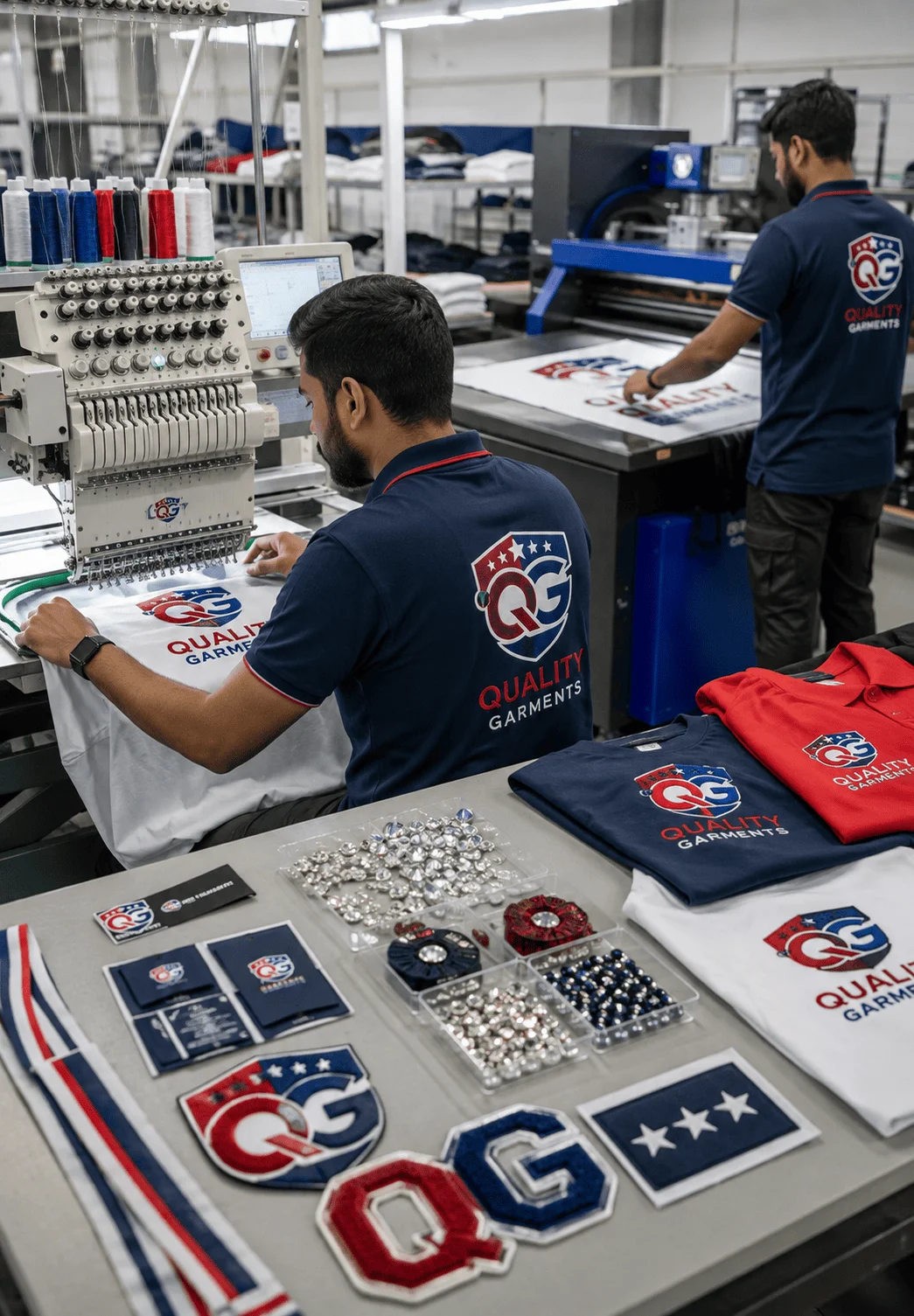
The appropriate Custom Hoodie Printing method should therefore be selected according to the fabric and artwork rather than simply choosing the most popular technique. Quality Garments currently offers several garment printing methods, including screen printing, DTF, DTG, sublimation, and puff printing.

4. Consider Custom Hoodie Embroidery
Embroidery provides a different appearance from printing because the design is stitched directly into the garment.
Custom Hoodie Embroidery can be used for:
- Brand logos
- Company names
- Small text
- Sports team branding
- Premium streetwear designs
- Chest and sleeve logos
Flat Embroidery
Flat embroidery creates a traditional stitched appearance and works well for many logos and branding applications.
3D or Puff Embroidery
3D embroidery adds raised dimension to selected areas of a design. It can create a bold appearance for logos and lettering.
Chenille Embroidery
Chenille creates a textured, soft surface and is often associated with varsity, collegiate, sportswear, and fashion-inspired designs.
The size, stitch density, placement, and complexity of your artwork should be considered before choosing embroidery. Quality Garments offers flat, 3D/puff, chenille, and distressed embroidery options.
5. Explore Other Hoodie Embellishments
Printing and embroidery are not the only ways to customize a hoodie. Brands can combine different embellishment techniques to create a distinctive product.
Depending on the design, options may include:
- Rhinestones
- Woven patches
- Printed patches
- Embossing
- Debossing
- Appliqué
- Woven labels
- Custom hang tags
- Branded packaging
For premium fashion and streetwear collections, combining embroidery with patches, printing, or other texture treatments can create additional visual and tactile interest. Quality Garments provides several premium embellishment options for customized apparel.

6. Think About Hoodie Fit and Construction
Fabric and decoration are important, but construction also affects the finished product.
Before approving production, check:
- Hoodie measurements
- Shoulder width
- Sleeve length
- Hood size and shape
- Ribbed cuffs
- Waistband construction
- Stitching quality
- Pocket construction
- Seam strength
- Overall garment weight
For the USA market, it is also important to confirm that your manufacturer understands the sizing and fit requirements for your intended customer.
A professional manufacturer should provide a sample or prototype before bulk production so you can check the garment before committing to a larger order.
7. Add Private Label Branding
If you are building a clothing brand, customization should extend beyond the outside design.
A Private label Hoodie can include your own:
- Woven neck label
- Printed neck label
- Size label
- Care label
- Hang tag
- Packaging
- Brand logo
- Barcode or product information
This creates a more complete brand experience and allows the hoodie to arrive ready for retail or e-commerce fulfillment.
Quality Garments provides private-label manufacturing with custom labels, hang tags, branded packaging, and other branding options for apparel businesses.
8. Choose the Right Custom Hoodie Manufacturer
Finding the right Custom Hoodie Manufacturer is an important part of the development process.
Before placing an order, ask the manufacturer about:
- Fabric composition and GSM
- Available hoodie styles and fits
- Sampling process
- Printing and embroidery capabilities
- Minimum order quantity (MOQ)
- Quality-control procedures
- Production lead time
- Private-label services
- Packaging options
- Shipping to the USA
For startups and growing brands, MOQ can be particularly important. Quality Garments states that it supports custom apparel orders starting from 20 pieces per design and provides sampling, bulk production, private labeling, printing, embroidery, and international shipping services.
9. Always Approve a Sample Before Bulk Production
A sample gives you an opportunity to evaluate the actual hoodie rather than relying only on digital artwork or specifications.
Check the sample for:
- Fabric feel
- GSM and weight
- Fit and measurements
- Stitching
- Print quality
- Embroidery quality
- Hood construction
- Cuffs and waistband
- Label placement
- Overall finishing
If something needs to change, make the corrections before bulk production begins.
Frequently Asked Questions
The best fabric depends on the intended use. Cotton can provide softness and comfort, cotton blends can offer a balance of comfort and durability, while fleece is commonly selected for warmer and heavier hoodies.
Printing applies artwork to the garment surface, while embroidery uses stitched thread to create the design. Printing is often suitable for detailed graphics, while embroidery can provide a textured and premium branding effect.
Yes. Private-label hoodie production can include custom neck labels, care labels, hang tags, packaging, logos, and other branding elements.
Depending on the fabric and design, options can include screen printing, DTF, DTG, puff printing, and other specialized techniques. The manufacturer should recommend the method based on the garment and artwork.
Yes. Custom Hoodie Embroidery is widely used for logos, lettering, team branding, and fashion designs. Flat, 3D/puff, and chenille embroidery can create different finishes.
Compare the manufacturer’s fabric options, sampling process, customization capabilities, MOQ, quality control, production timeline, private-label services, and shipping capabilities before placing your order.
Some manufacturers offer low-MOQ production for startups and emerging brands. Quality Garments currently states a minimum of 20 pieces per design for its custom apparel manufacturing services.
Final Thoughts
The right decoration technique can transform ordinary apparel into distinctive Custom Clothing that represents a brand, team, or organization professionally.
Custom Embroidery works well when you want textured and premium branding. Custom Apparel Printing provides flexible options for graphics, logos, patterns, names, and numbers. Garment Embellishments add another level of texture and visual detail for brands seeking a more distinctive finish.
Before starting production, consider the fabric, artwork, garment use, desired appearance, quantity, and durability requirements. Most importantly, request a sample before approving bulk production.
For USA brands looking for a Custom Clothing Manufacturer USA businesses can work with for manufacturing and customization, Quality Garments offers custom apparel production together with embroidery, printing, premium embellishments, private labeling, sampling, and international shipping.


